Feeds:
Posts
Comments

Posts Tagged ‘Cooking with Italian Grandmothers’

The first time I cooked for my boyfriend, I cooked a beautiful Italian quail dish. I hadn’t actually thought about the fact that I was cooking Italian for the Italian. When he arrived and I told him what I was making, I saw a very slight look of surprise cross his face.  After dinner and a number of very appropriate comments on my skills in the kitchen, he commented that no one had ever cooked Italian for him before. Competing with an Italian Nonna’s cooking is a challenge I am not really sure I would have been up for had I thought about it!
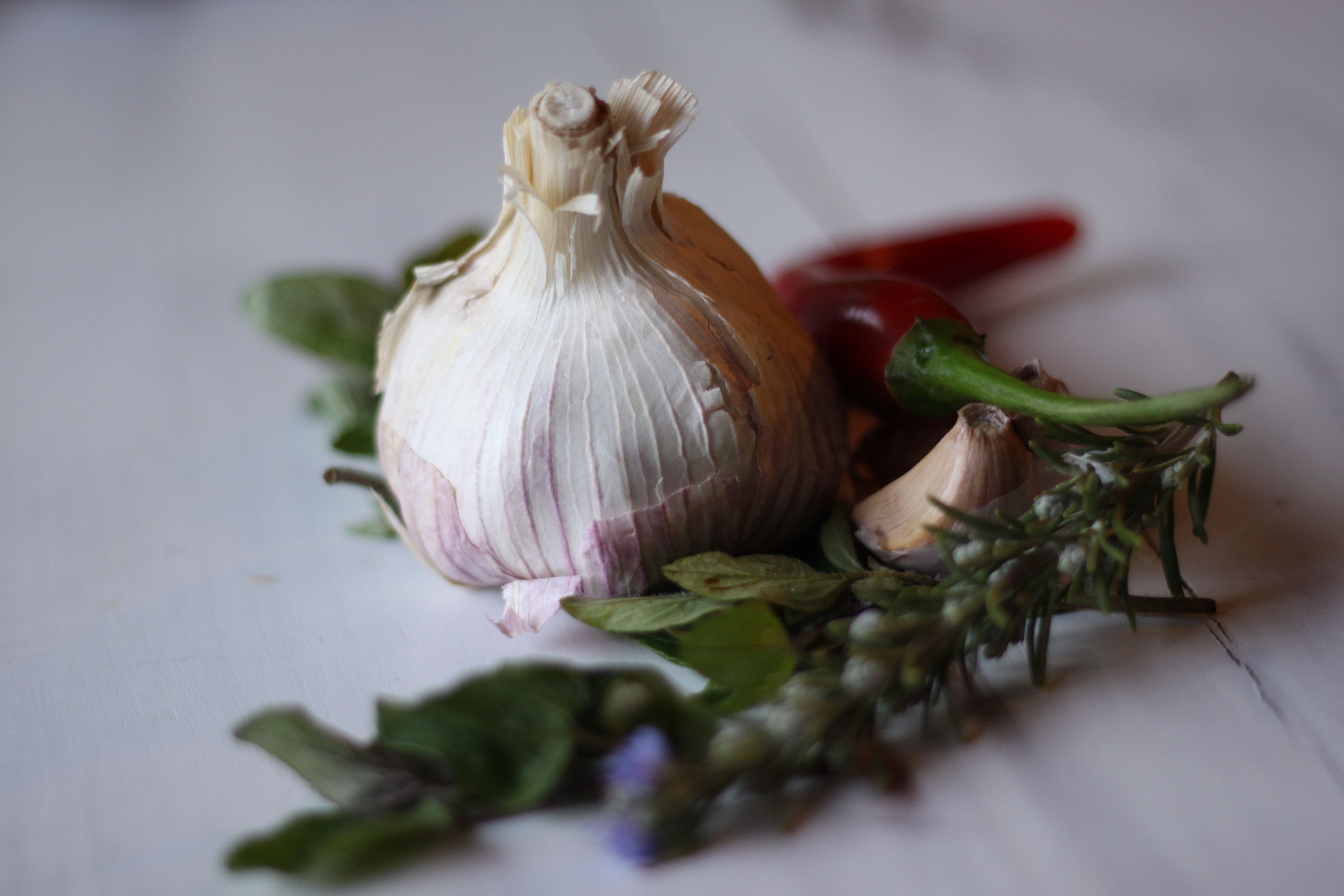
Garlic, Rosemary, Chilli and Oregano for the Coniglio in Bianco

I have always loved Italian food. In fact there are a few all Italian things that I love!  I am talking parmesan. Really good parmesan. Proscuitto, mind blowing proscuitto. And gelato, how could we forget gelato! I love dark Italian eyes, I love the sounds of the passionate Italian language and I go weak at the knees for a certain Italian man who says “Ti Amo” to me (although I must admit the first time I heard it I had to google just to make sure!!)

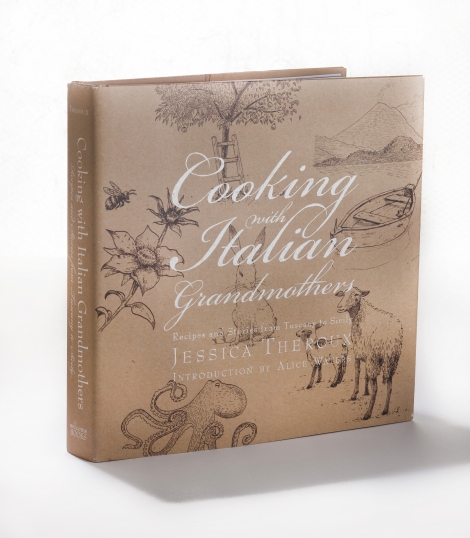
If you have been reading my blog, you will know I have a current infatuation with a book called Cooking with Italian Grandmothers, by Jessica Theroux. You can buy it here
I love trying something new and have never cooked or eaten rabbit but have been eyeing off the Tuscan chapter in my book with 3 lovely rabbit recipes. After the boyfriend mentioned in one of our endless food discussions that he used to eat rabbit all the time growing up, I couldn’t resist the challenge.

Rabbit has historically been a poor mans meal, as Bruna says in the book, “I Conigli: E facile tendril, ammazzarli, e soon buonissimi da mangiare” “Rabbits: They’re easy to raise, to kill and they are delicious to eat” It is not surprising that rabbit has been found on the tables of many working class families throughout many cultures throughout the world. With their propensity to behave, well, the way rabbits do, they can live almost anywhere in the wild and thrive. I had expected the rabbit to be cheaper to be honest. Although it was a large rabbit and would have fed 3-4 people, it was $22. Not bad value but not super cheap either. This recipe would work just as well with chicken, although I would keep an eye on how long you cook it as chicken behaves differently to rabbit. I have to say, I was apprehensive about cooking and eating rabbit, but I enjoyed it actually. I am keen to try a baked rabbit dish after making this one. There is a fennel and pancetta dish in the book that I may have to try soon!
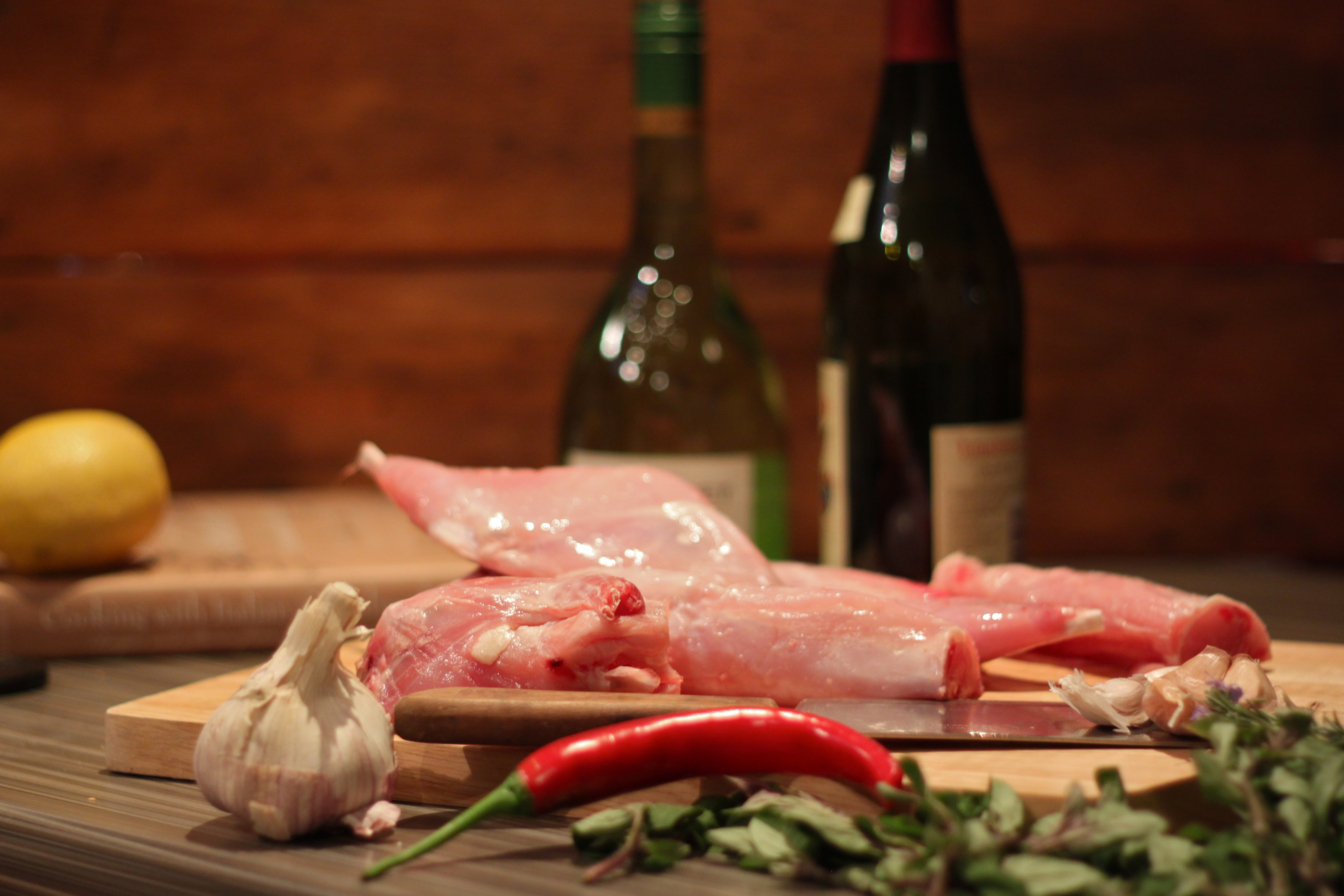
Rabbit ready to be braised

I had the butcher cut up the rabbit for me, so it was in about 6 pieces. The book recommends cutting it your self, into about 10 pieces.

Coniglio in Bianco (White Wine-Braised Rabbit)

1 rabbit

1 1/2 tablespoons olive oil, divided

1/2 teaspoon salt

1/2 yellow onion, medium dice

7 cloves garlic, unpeeled

1 large carrot, peeled, medium dice

1 stalk celery, medium dice

2 teaspoons minced fresh rosemary

1/4 cup minced fresh oregano

1/2 teaspoon minced dried hot pepper

3/4 cup white wine

1 1/2 cups water

1/3 cup brined dark olives ( I used kalamata)

Zest of 1/4 lemon no pith

Chopped parsley to garnish

(I have left out the portioning instructions as I had the butcher cut mine up)

Warm 1 1/2 tablespoons of olive oil in a large pot set over medium heat. Sear the rabbit pieces in batches, until dark golden brown; set them aside and sprinkle them with the 1/2 teaspoon of salt.

Immediately after you have finished searing the rabbit, turn down the heat down to medium and sauté the onion, garlic, carrot, celery, rosemary, oregano and dried hot pepper in the oil remaining in the pan. Sprinkle the vegetables with a little salt, and if they are sticking too strongly to the pot or looking dry, add an extra drizzle of fresh olive oil. Cook, stirring often, until the vegetables have lightly caramelised, about 5 minutes.
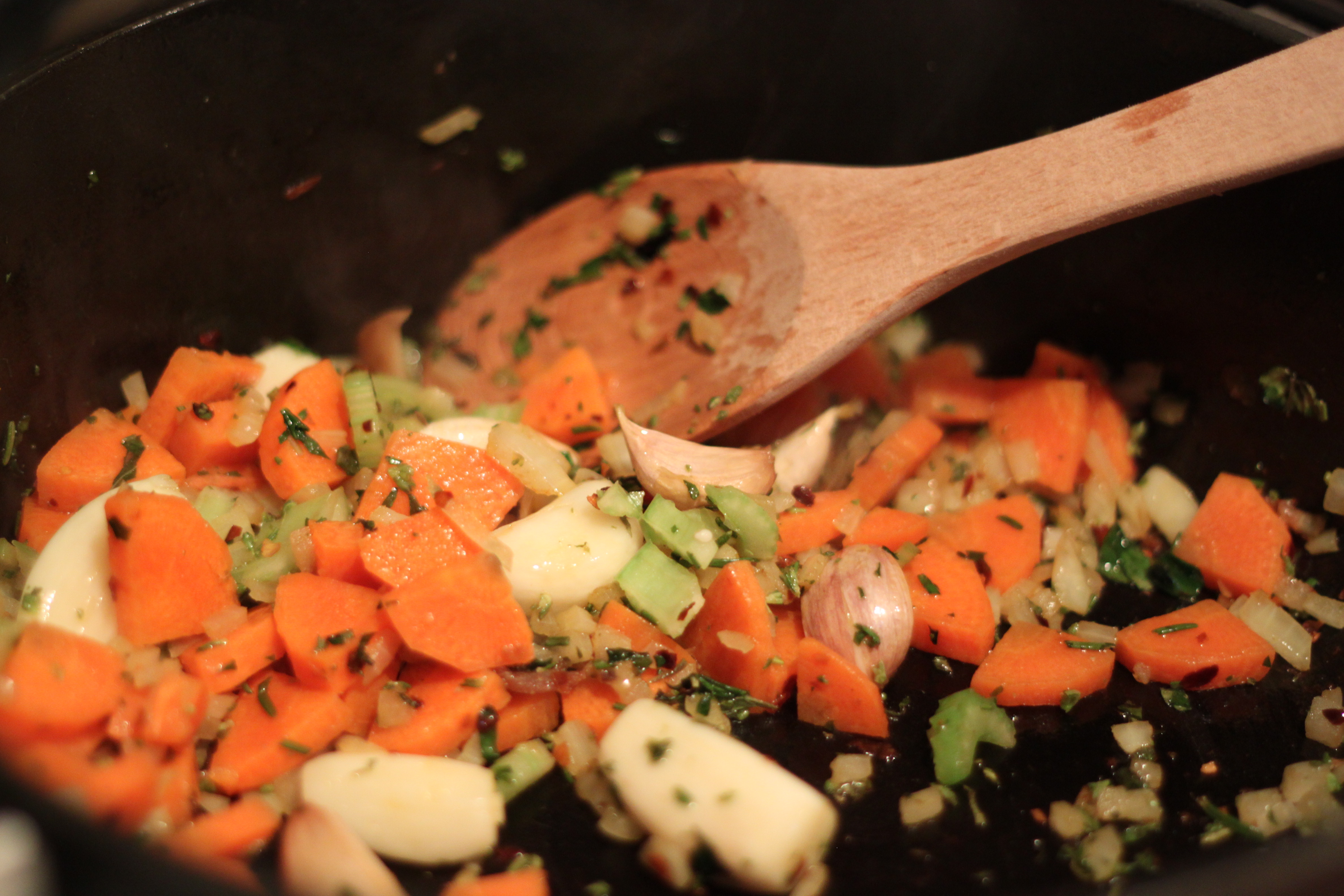
Sautéed Vegetables

Deglaze the pot with the white wine, gently scraping up any browned bits that have caramelised on the bottom of the pot. Add the water, olives and the lemon zest, and return the rabbit pieces to the pot. Bring the liquid to a gentle boil, then reduce the heat to low to create a lightly bubbling simmer. Cover with a lit set slightly ajar and simmer for 1 hour and 15 minutes, until the rabbit meat is tender and pulling away from the pot, and taste the braise for salt, adding more if you desire. (I didn’t need to) Serve the rabbit in shallow bowls, with a small ladle of braising sauce poured over the top and a sprinkling of freshly chopped parsley.
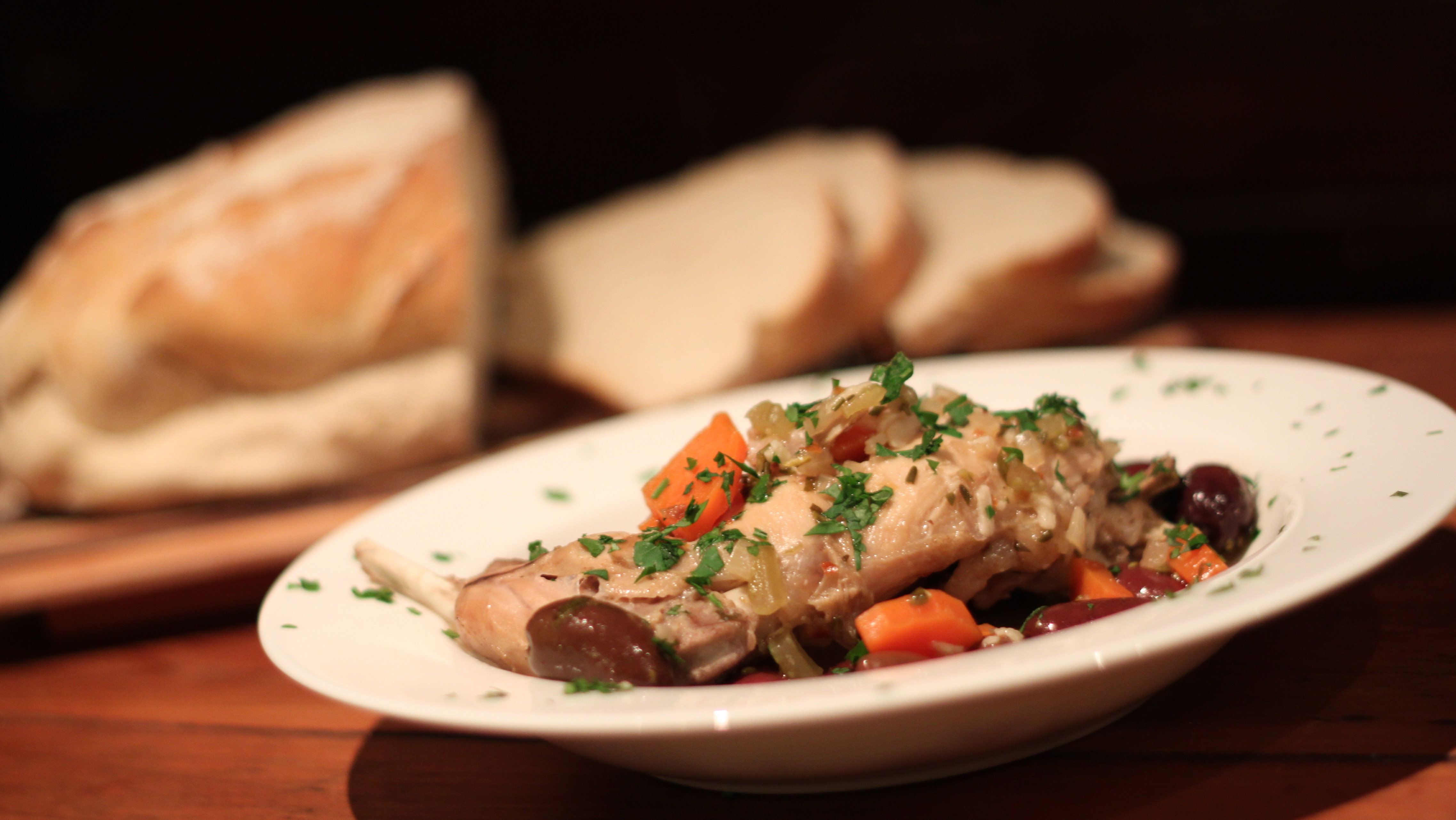
I served this with some fresh sourdough bread and a simple rocket salad.

I think we can safely say this was a dish that was enjoyed!!
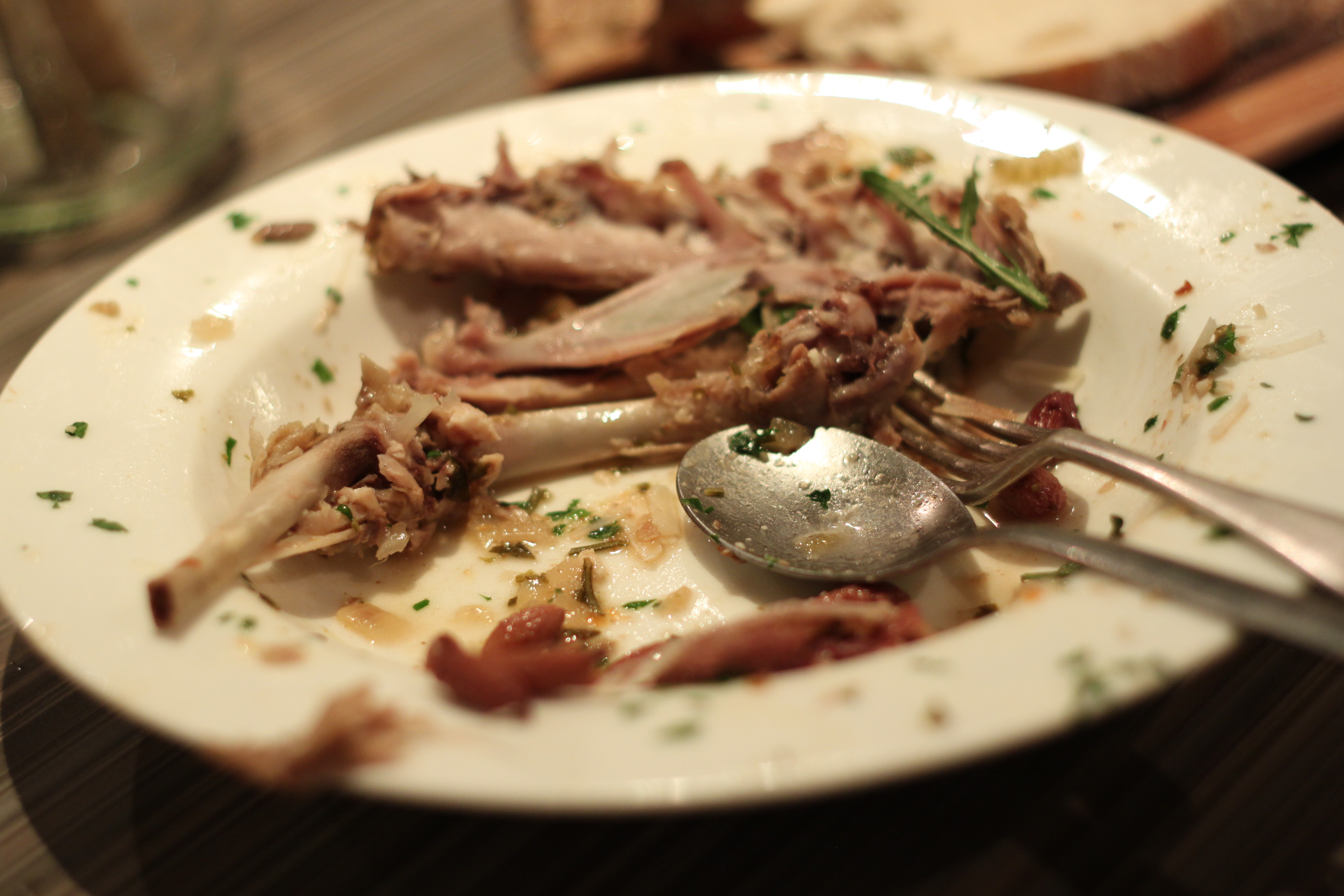
I guess he enjoyed it!

So, tell me do you have a favourite rabbit dish? Or perhaps a dish from your childhood that you would like to revisit?


Read Full Post »

I have been listening to some lectures by Jack Canfield this week and he tells the story of how he came up with the name “Chicken Soup for the Soul” Jack is a big believer in meditation and had been meditating for three days asking what he believes is the infinite intelligence, source energy or God if you prefer, to help him with a title for his book. He says on the third day he saw a hand come out with the words chicken soup and he thought, “What on earth does that have to do with my book?!”

This voice inside his head said to him, “Well when you were little and you were sick, your Grandmother would always make you chicken soup” He said, “But this is not a book about sick people!” And then he realised;  peoples spirits were sick. The Gulf war had just ended, there had been a recession and people were uncertain. He mulled over “Chicken Soup for the Spirit” and finally rested on what we all now know as “Chicken Soup for the Soul” He says when that title came into his head, he had a shiver up his spine.

My daughter has been quite sick in the past few months and a good friend invited us over for dinner this week and she mentioned that she would make her “Bow Tie Soup” which would make Poppy feel better and it got me thinking. So many cultures around the world have their own version of a chicken soup that is not only nourishing but healing.

Now I was curious, is there any scientific evidence to support this? Or is this an old wives tale?

According to an article in the New York Times, chicken soup may be more effective at treating coughs than over the counter cough medicines. Given the lack of hard science to show that there is any benefit to using cough medicine, this is probably not a hard feat! There was, however a study completed in 2000, by Dr. Stephen Rennard of the University of Nebraska Medical Center in Omaha who using blood samples from volunteers,  showed that the soup inhibited the movement of neutrophils, the most common type of white blood cell that defends against infection. Dr. Rennard theorizes that by inhibiting the migration of these infection-fighting cells in the body, chicken soup essentially helps reduce upper respiratory cold symptoms. This was interesting for me particularly because currently Poppy’s neutrophil levels are so low she is unable to fight off even the slightest infection.

There is something more to chicken soup and I think Jack Canfield has it in one. We give medicine to our children when they are sick, we give them cuddles, we tuck them up in bed and pick up their snotty tissues but often we are left feeling helpless, like we could somehow do more.

For me, it makes me feel better to cook Poppy nutritious and nurturing food. I am a fan of pureeing lots of veges and slipping them into meatballs, pasta and anything else I can sneak past her observant little tastebuds. For the Jewish, a child’s Bubbe, may make a Chicken Matzo Ball Soup, if you are in Italy, your Nonna would make you a Pastina en Brodo di Pollo, or Pastina in a Chicken Broth. If you are in Asia, a dose of Tom Yum or Tom Ka Gai would knock your illness on its head. It is fascinating that across so many cultures, variations on the same dish have evolved and are given for treatment of the same condition. 

Is this science or is this soul? A warm homemade chicken broth is simple, nutritious and it feeds our soul. Our child feels warmed and cared for. As a parent we feel like we have taken the extra step and nourished our child but the soup has another power. In the act of making, giving and feeding our child, our own soul is nurtured. It helps us to feel like we have done our best. We are helping to make them better away from the powerless feeling we so often have when dealing with doctors and pharmaceuticals. So last night I made up a big batch in the slow cooker and have about 4 litres of it waiting to be frozen and then used in various dishes.

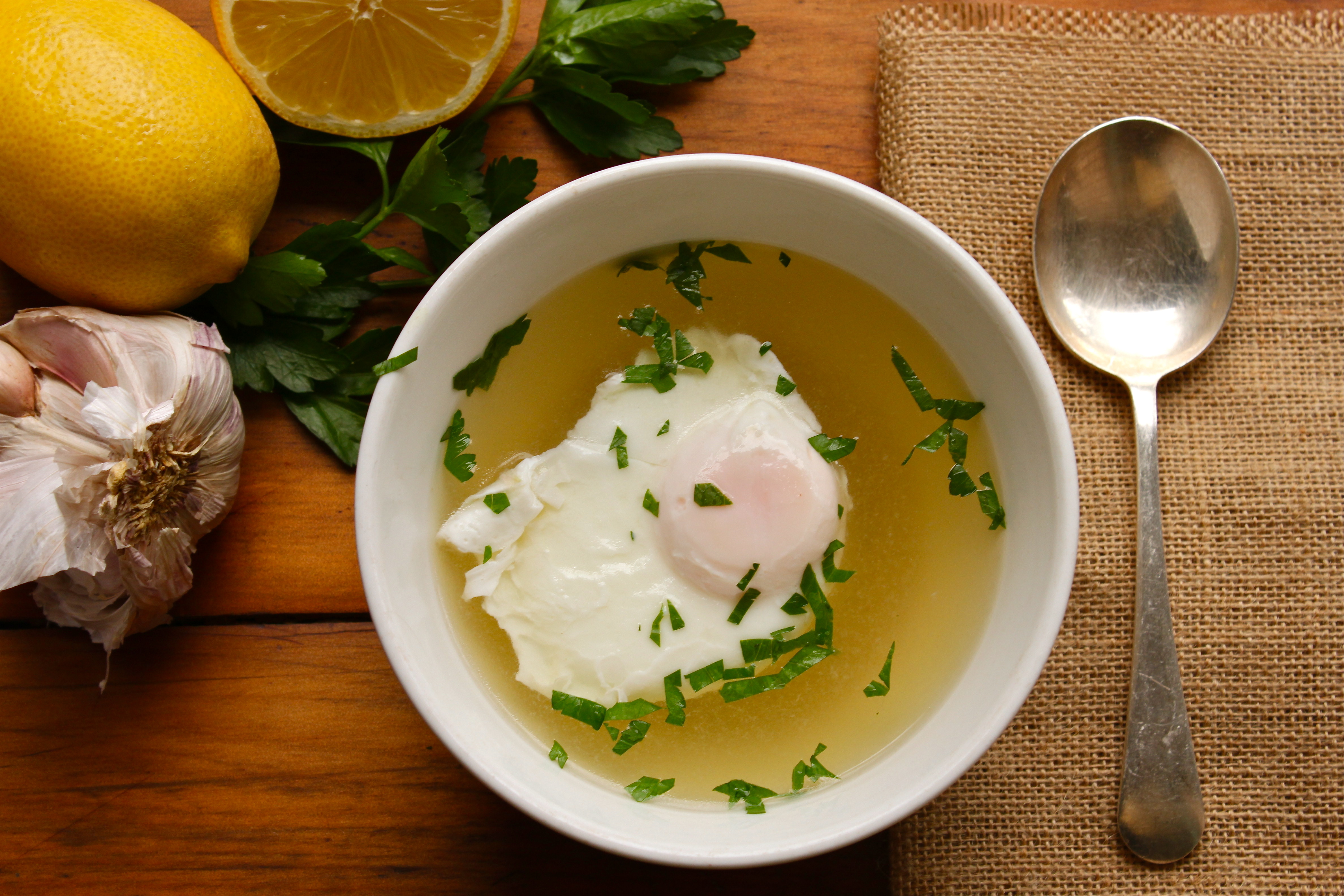
Today it was a simple Chicken Soup with Poached Eggs from one of my favourite books “Cooking with Italian Grandmothers’ by Jessica Theroux , you can buy it here

Chicken Soup with Poached Eggs – adapted from Jesssica Theroux’s Cooking with Italian Grandmothers

First make your stock. I like things to be easy, so I do this in the slow cooker. I do however make the effort to buy a whole organic chicken for making a soup or stock. I think if its going to be for healing, then I want as much goodness as I can, but I know I will get a few good meals from this one.

I remove the breasts and thighs and put these aside for another meal and place the carcass and the wings in the slow cooker. I chop up 2 carrots and two sticks of celery roughly and pop these in too. 1/2 a lemon goes in. Apparently the acid from the lemon pulls the minerals from the chicken bones into the soup.

I set this on a low heat on the slow cooker overnight. I then strained it through a strainer and cooled and froze what I didn’t need for lunch today.

To make the soup for about 4-6 people…..

6 cups Chicken Broth lightly salted

3 cloves whole garlic peeled

4-6 eggs

2 tablespoons parsley or majoram (I used parsley simply because I have it growing outside)

Salt to taste

Freshly ground pepper

Bring the chicken broth to the boil and add the garlic. Reduce the heat and simmer covered for 10 minutes. Season to taste and remove the whole garlic cloves from the broth. Crack the eggs into small  bowls and while the broth is at a low simmer, add one egg at a time to the pot. (I must admit, I am not the perfect egg poacher and you can see from my picture, my eggs never end up in a perfect ball, its lucky it doesn’t affect the taste 😉 )

Once all the eggs have been added , place the lid on slightly ajar, be sure the flame is low, otherwise the broth could boil over, disrupting the eggs. If you prefer runny yolks (I do, it was delis having all that yolk burst open into the soup), cook for 3 minutes total. (I actually found I needed a little less than this).

To serve, spoon an egg into each bowl and ladle the broth over. Garnish with freshly chopped herbs, salt and black pepper. There are a number of additives to this dish that are delicious, olive oil, grated cheese and a scattering of sizzling bread crumbs are just a few examples.

This soup was delicious. Just perfect to warm up a winters day.

Read Full Post »